Socks come in many types, each designed for different needs and occasions. People often choose socks based on their height, material, and purpose, but knowing the variety can help make better decisions for comfort and style.
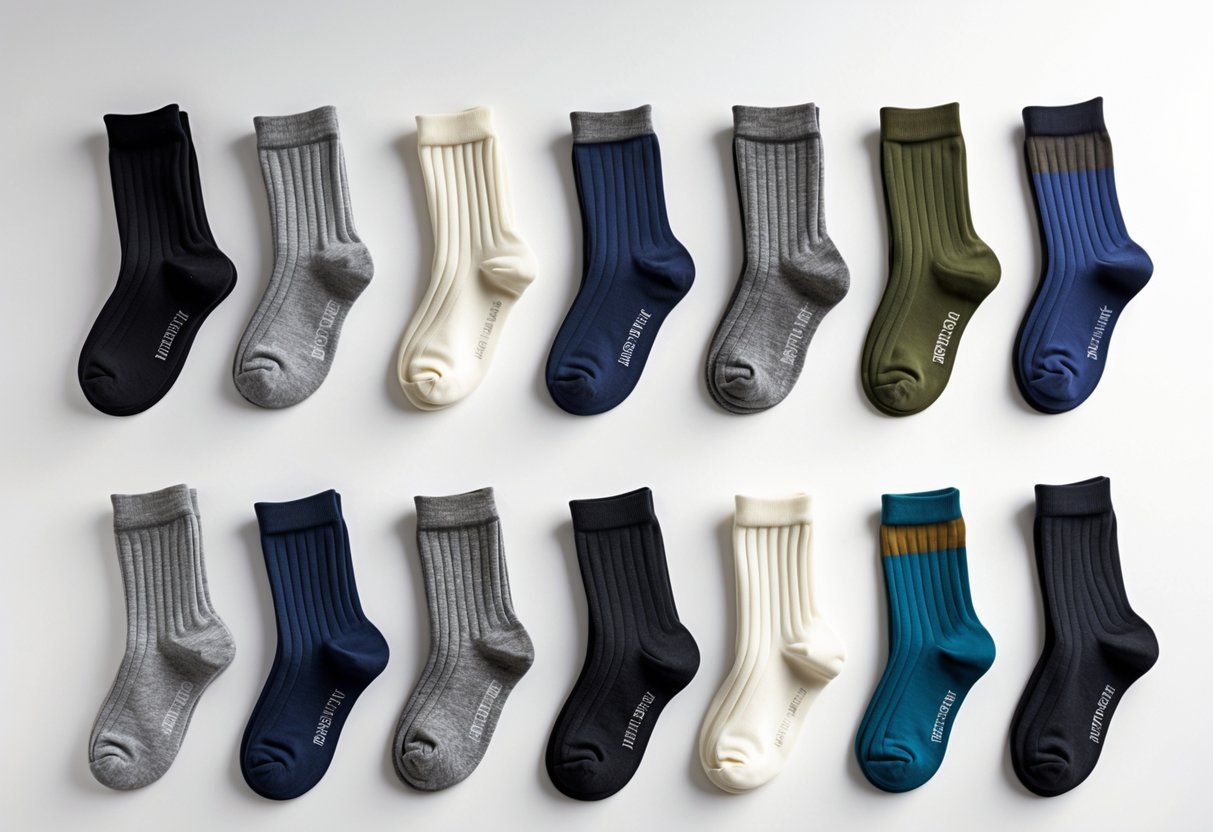
Understanding the different sock types and materials helps people select the right pair for any activity or outfit. This article covers 14 common sock types, focusing on their lengths and materials to guide readers in finding what suits them best.
Table of Contents
.
1) Ankle Socks
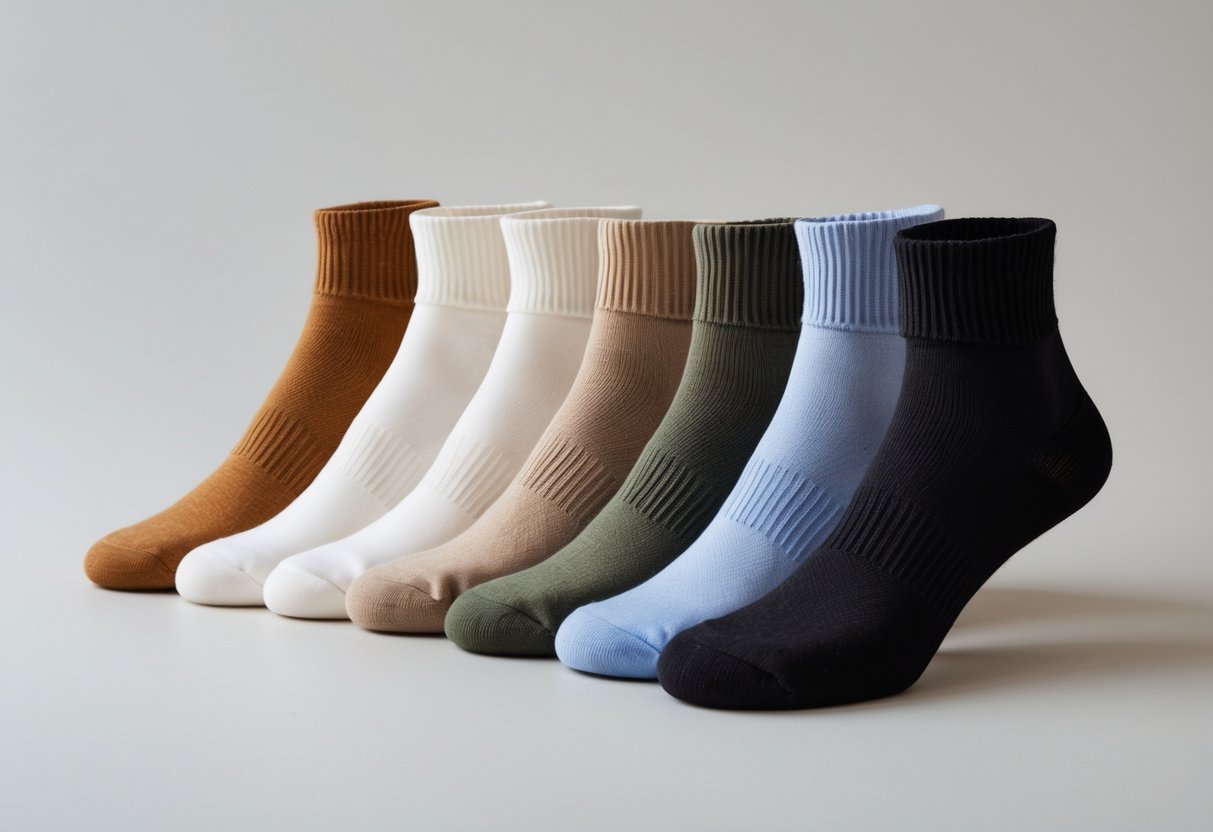
Ankle socks reach just above the ankle bone. They are designed to be low-cut, making them ideal for wearing with sneakers, flats, or other low-profile shoes. This style offers enough coverage to protect the feet while remaining discreet.
These socks are popular for casual and athletic use. They provide a balance between comfort and breathability, which helps prevent overheating during activities. Many people choose ankle socks for everyday wear because they combine function and a clean look.
Materials can vary, but cotton blends are common for ankle socks, offering softness and moisture control. Some versions include added cushioning around key areas to reduce friction and prevent blisters.
Ankle socks work well in warmer weather due to their shorter length. They also fit easily inside most shoes without bunching up. Overall, they are a practical choice for many kinds of footwear and daily activities.
2) Crew Socks
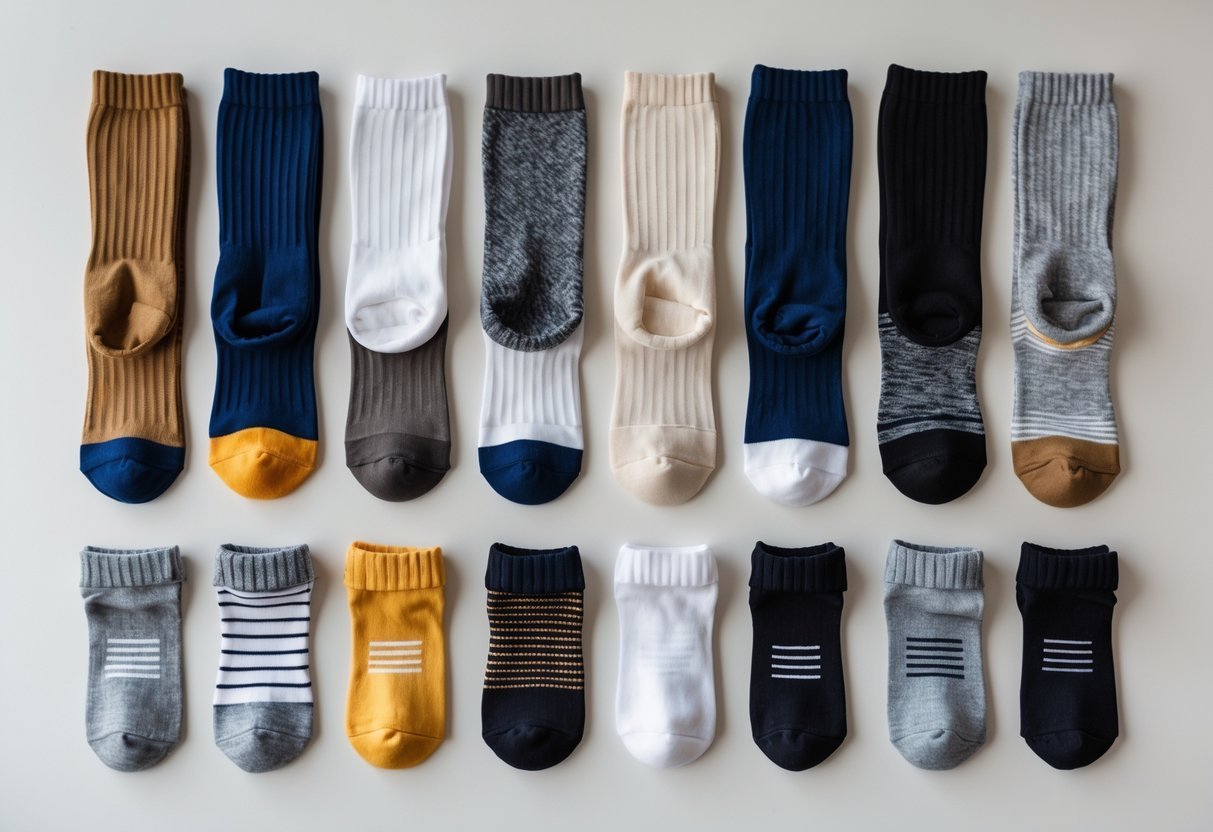
Crew socks are a popular sock height that typically reach mid-calf. They measure about 6 to 8 inches from the heel, making them longer than ankle socks but shorter than knee-highs. This length works well with many types of shoes, including boots, athletic shoes, and high-tops.
These socks are versatile for different activities. People often wear them for sports, casual outings, or work. The extra coverage helps protect the lower leg from friction and adds warmth without being too heavy.
Crew socks come in many styles and materials. Some are made from cotton for everyday comfort, while others use wool or synthetic fibers for better moisture control and durability. There are also fashion versions with bold patterns and colors, perfect to add personality to an outfit.
They suit a wide range of needs without being too noticeable. Because of their practicality and comfort, crew socks remain a top choice for many people.
3) Knee-High Socks
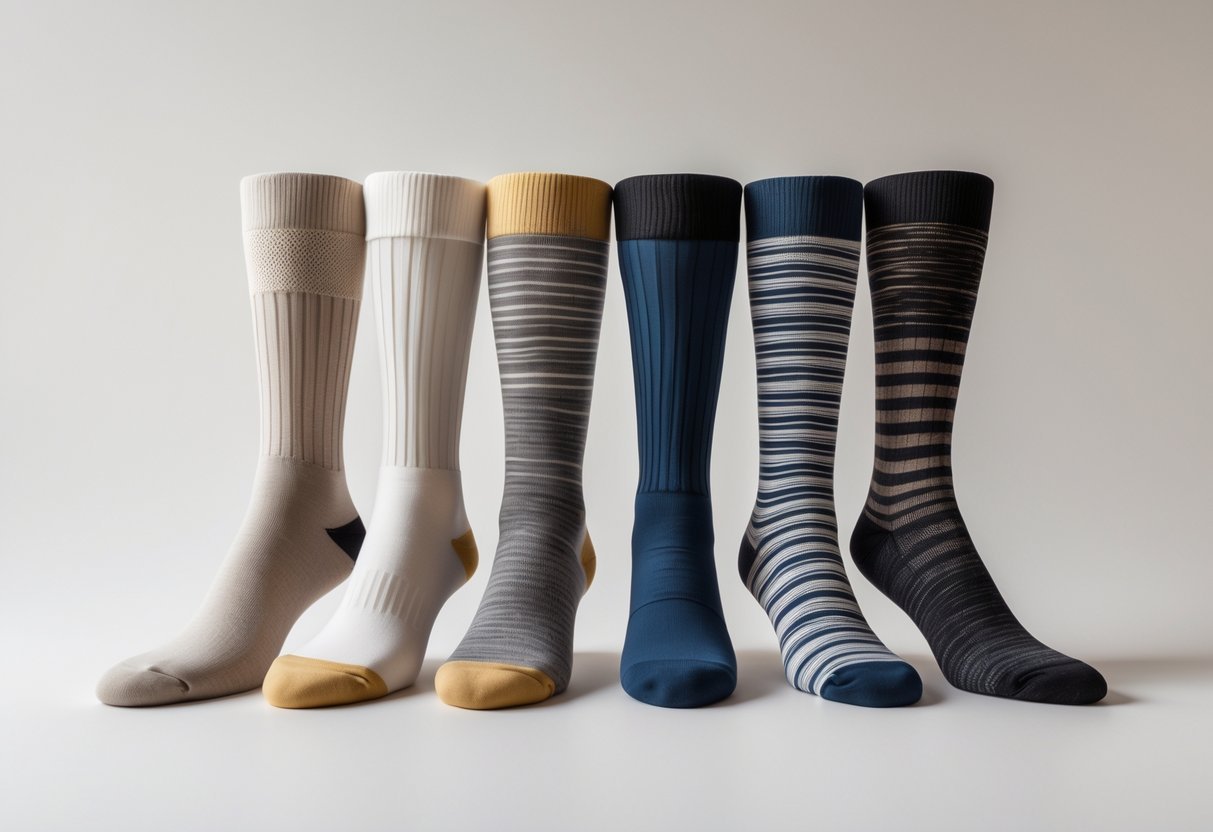
Knee-high socks reach up to the knee, providing full coverage of the lower leg. They offer extra warmth and protection compared to shorter socks. This makes them useful in cooler weather or for activities that need more leg coverage.
These socks are popular in both casual and formal settings. People often wear them with skirts, dresses, or shorts for style and comfort. They also work well with boots, helping to prevent chafing and adding a layer of cushioning.
Knee-high socks come in many materials. Cotton and wool are common for warmth and breathability. Some types also have added stretch for a snug fit. Compression knee-high socks serve a medical purpose by improving blood flow and reducing fatigue during long periods of standing or sitting.
They offer a balance between function and fashion. Knee-high socks are a versatile choice that can be worn in different seasons and for various activities.
4) No-Show Socks
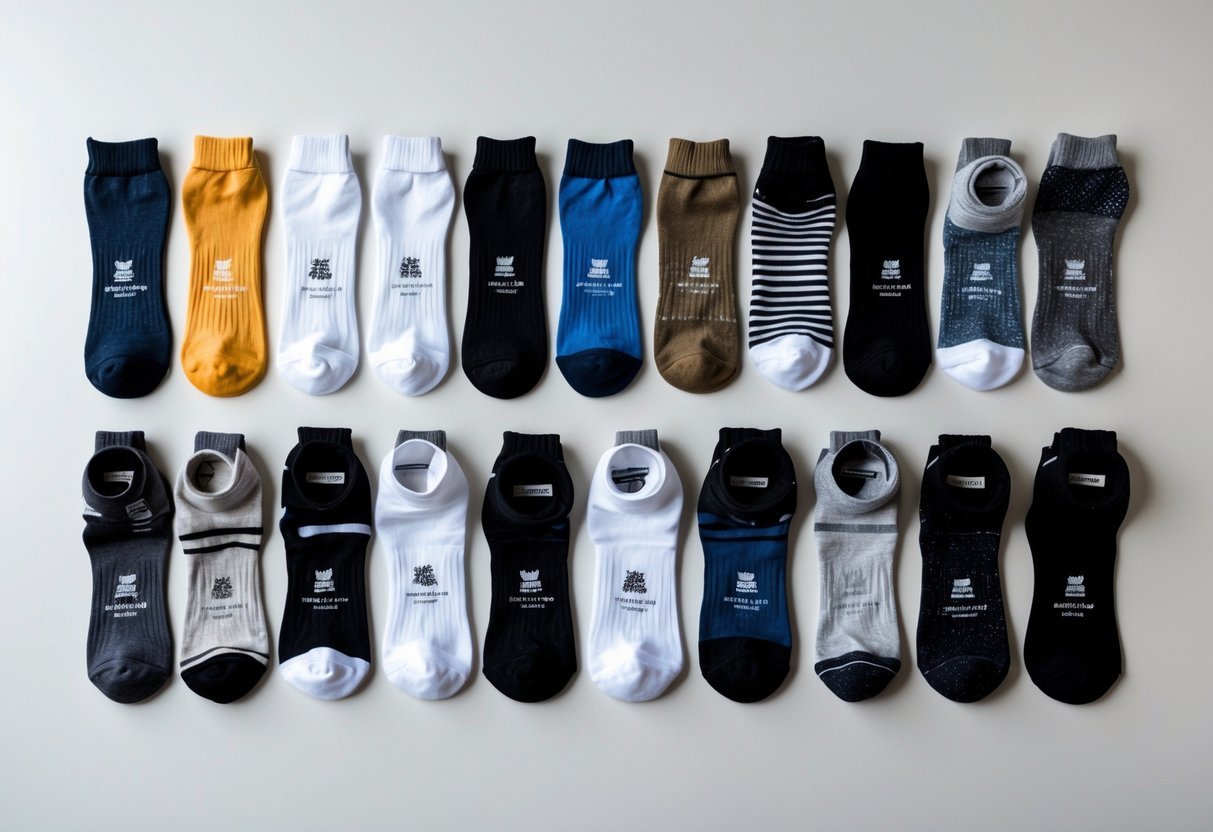
No-show socks are designed to be hidden inside shoes while still providing comfort and protection. They cover just the heel and the bottom of the foot, making them ideal for low-cut shoes like loafers, sneakers, or slip-ons. This helps prevent blisters without showing above the shoe line.
These socks are often made from lightweight materials that allow feet to breathe. Many no-show socks include features like cushioning in key areas and silicone grips at the heel to keep the sock from slipping off. This makes them practical for everyday wear, especially in warmer weather or when a minimal sock look is desired.
No-show socks are versatile. They work well for casual outfits and active use, such as walking or light exercise. However, because they offer less coverage, they might not provide enough warmth or protection for colder conditions or intense activities. Overall, they serve the purpose of comfort and style without being visible.
5) Mid-Crew Socks
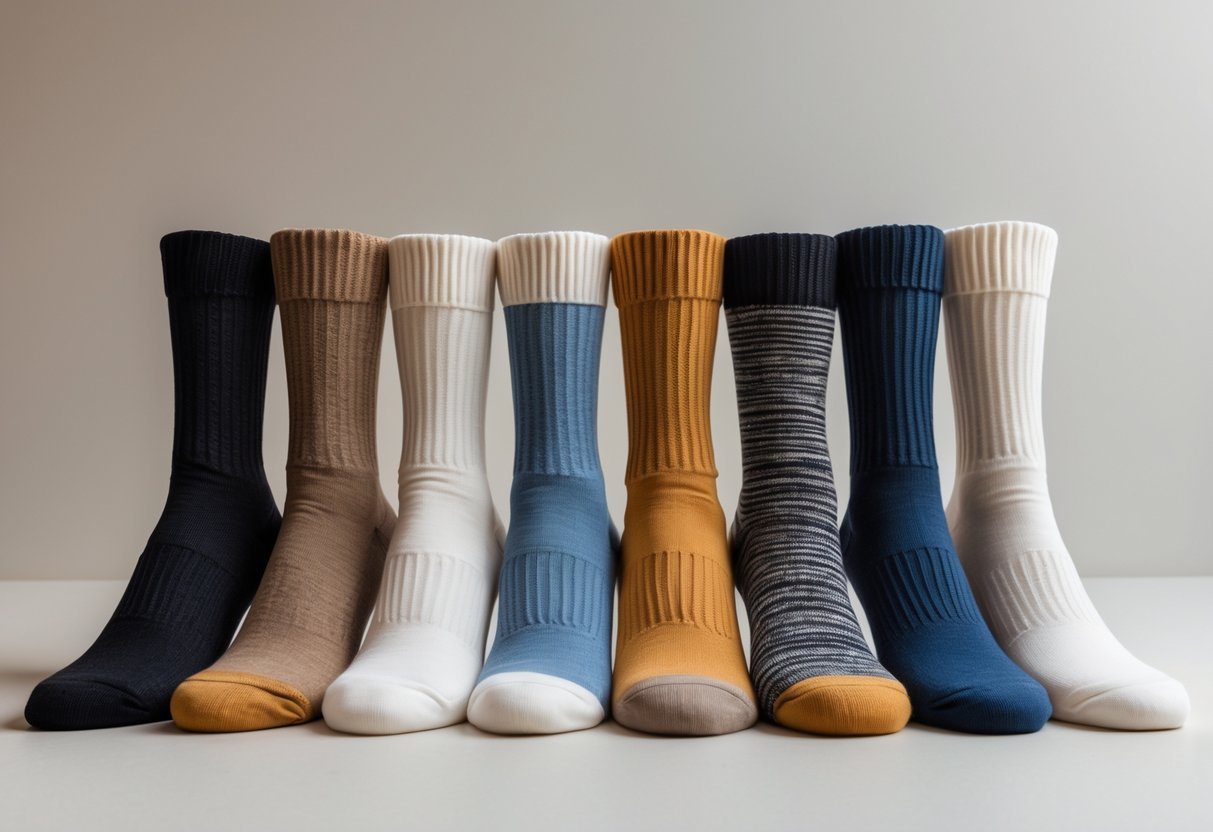
Mid-crew socks sit between ankle socks and crew socks in height. They usually reach just above the ankle but below the mid-calf area. This makes them a versatile choice for many activities.
They offer more coverage than ankle socks, which can help protect the lower leg from chafing or rubbing against shoe collars. Mid-crew socks also provide moderate warmth, making them suitable for cooler weather without causing overheating.
These socks work well with most shoes, like sneakers, casual shoes, and some boots. People who want a balance of comfort and protection often choose mid-crew socks for everyday wear or light sports.
The fit tends to be snug but not tight, helping to keep the sock in place during movement. Mid-crew socks come in different materials, including cotton, wool, and synthetic blends, allowing users to pick one based on comfort, breathability, or moisture control needs.
6) Over-the-Calf Socks
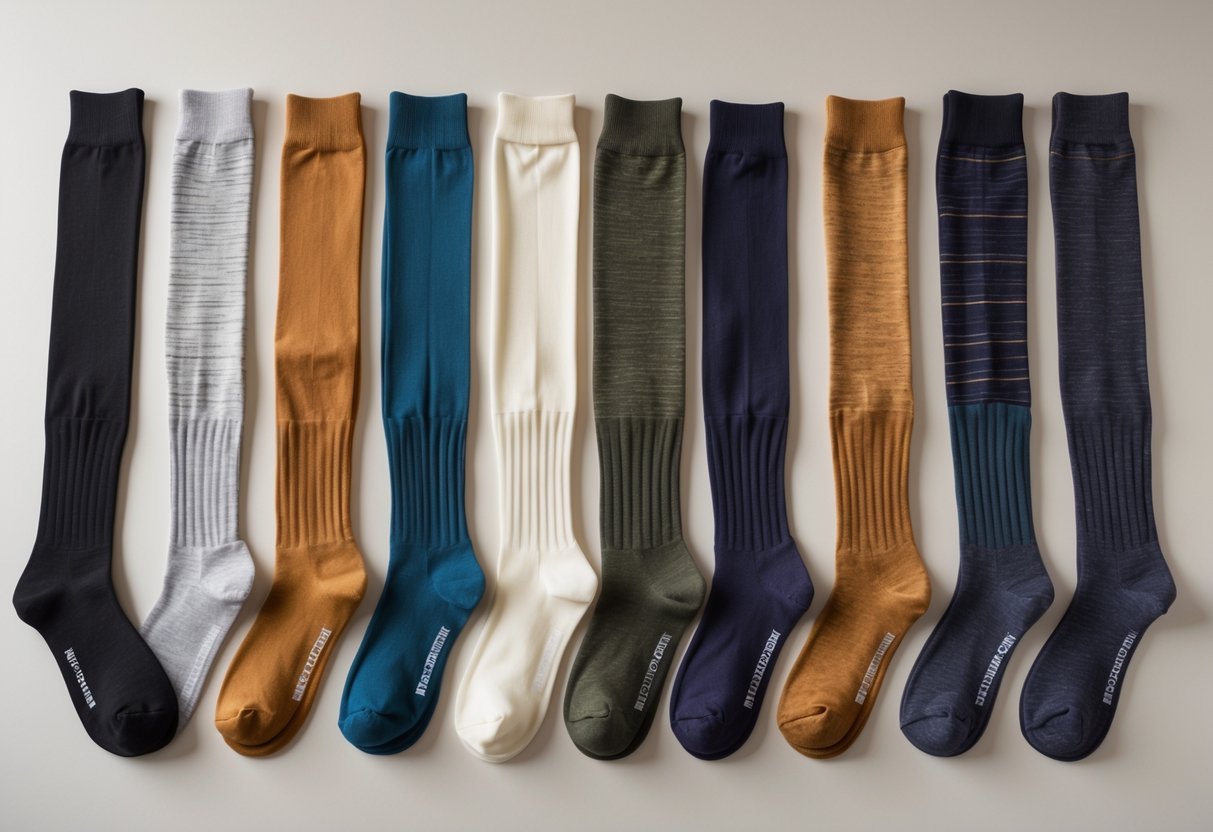
Over-the-calf socks reach just below the knee, providing full coverage of the lower leg. They are commonly worn with formal attire, such as suits or dress shoes, because they stay up well and keep the leg covered when sitting.
These socks are often made from fine materials like cotton, wool, or blends that offer both comfort and durability. They help prevent the skin from showing when crossing legs, which is a common concern in professional settings.
Besides fashion, over-the-calf socks also offer extra warmth and support. Athletes and workers in colder environments sometimes prefer this length to protect their lower legs. Overall, they combine function with a sleek appearance.
7) Thigh-High Socks
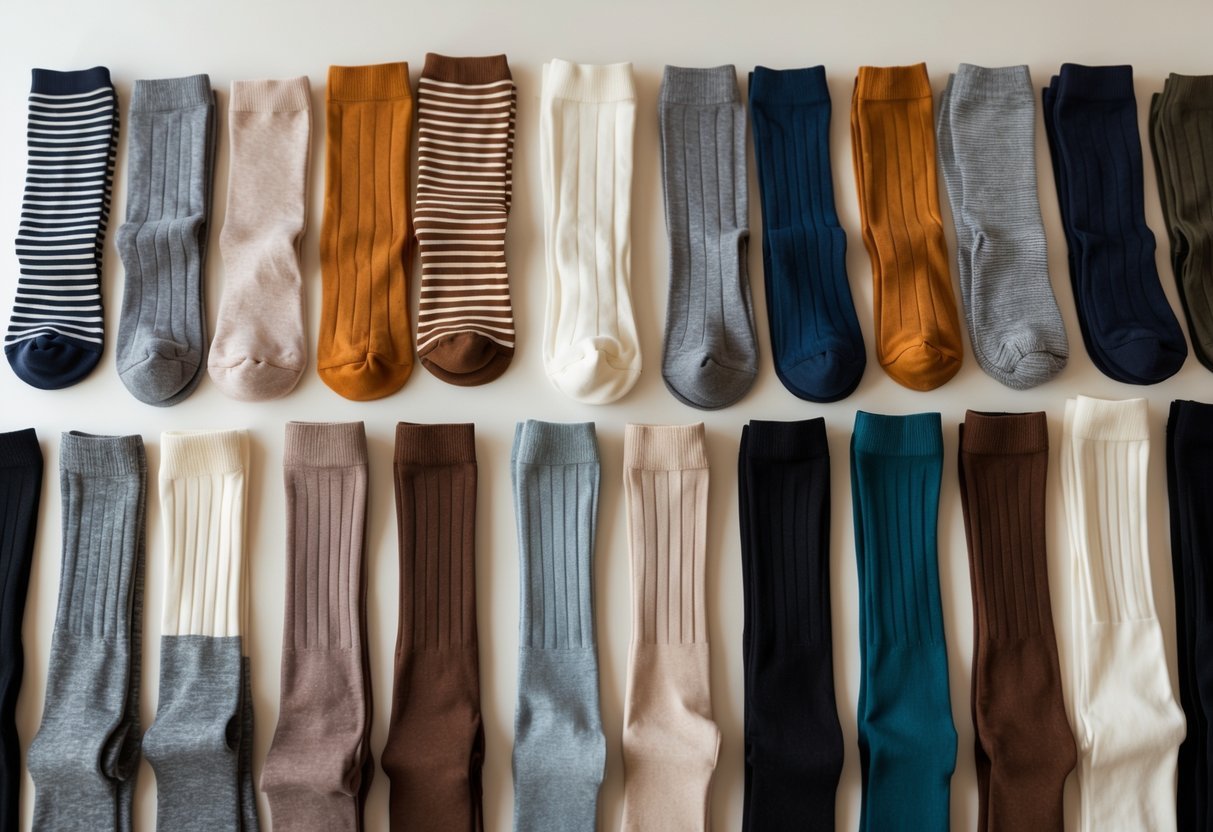
Thigh-high socks extend well above the knee, reaching the thigh. They are popular for added warmth, style, and sometimes for fashion statements. People often wear them with skirts, dresses, or shorts.
These socks come in various materials like cotton, wool, and synthetic blends. Some have elastic bands or silicone strips at the top to help them stay up without slipping. They can be thin for a sleek look or thick for extra comfort and warmth.
Thigh-high socks work well in cooler weather because they cover more leg area. They are also used in certain sports or dance activities to provide support and reduce muscle strain. In fashion, they add a layer that can change the whole outfit’s appearance, making it look more polished or edgy.
While they offer more coverage, some may find them less practical for everyday wear. But for those who prefer a bold sock option or need extra leg warmth, thigh-high socks are a solid choice.
8) Compression Socks
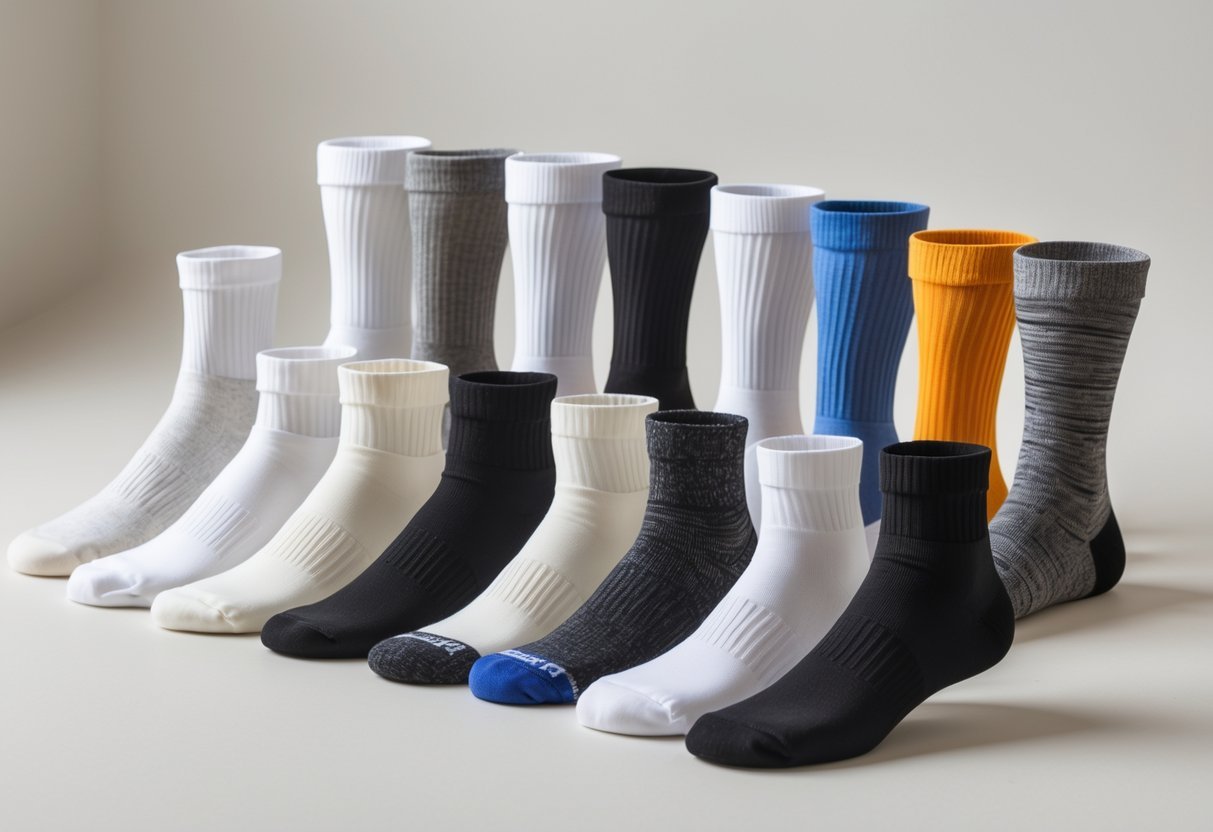
Compression socks are designed to apply gentle pressure to the legs. This helps improve blood flow and reduce swelling. They are often used by people who stand or sit for long periods or have circulation problems.
These socks come in different lengths, such as ankle, calf, or knee-high. They also vary in compression strength, measured in millimeters of mercury (mmHg). Higher compression levels offer more support but should be chosen carefully.
Athletes use compression socks to help with muscle recovery. Travelers wear them to lower the risk of blood clots during long flights. Medical users benefit from reduced leg pain and fatigue.
Compression socks are made from materials like nylon, spandex, and sometimes wool. Wool options provide breathability and comfort. Proper fit is important to get the right level of compression without discomfort.
Choosing the correct size means measuring the ankle and calf. Wearing them regularly can support leg health and prevent problems like varicose veins.
9) Dress Socks
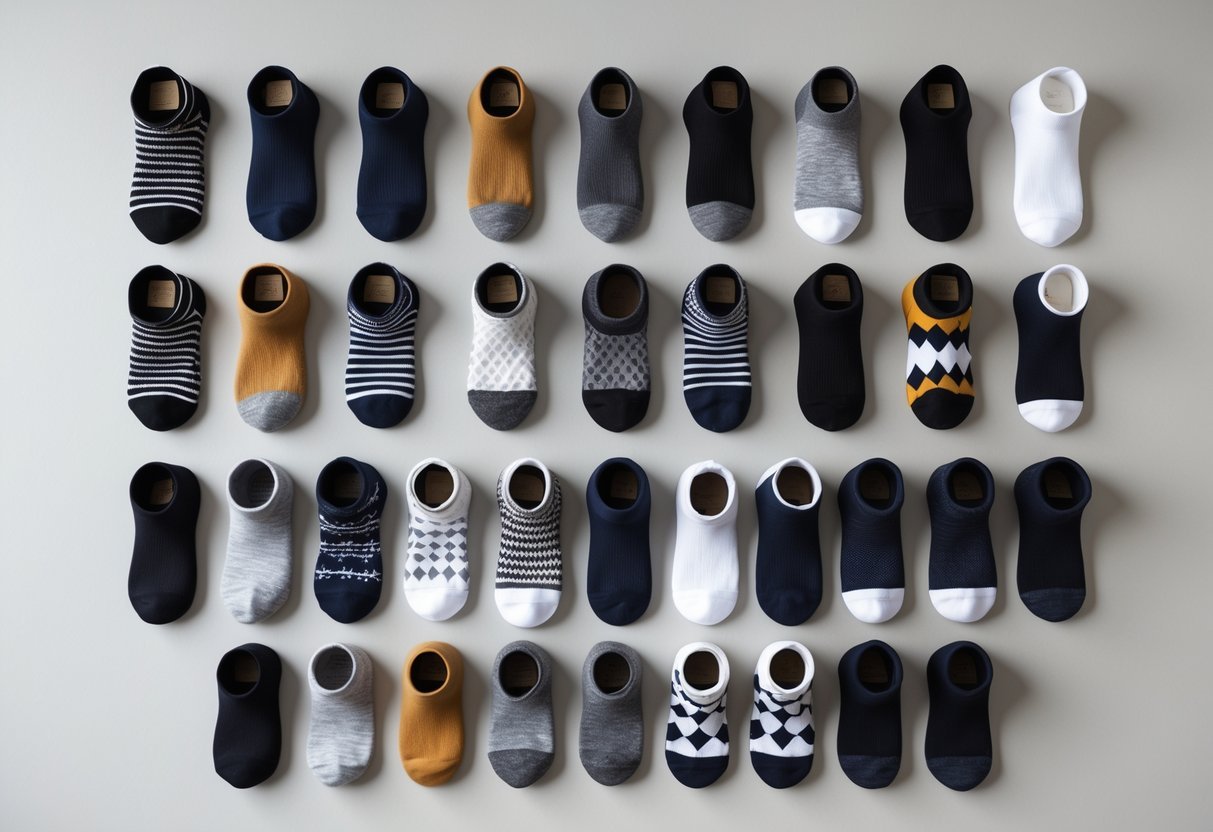
Dress socks are designed to be worn with formal shoes and suits. They usually have a smooth, thin fabric that fits closely to the leg. This makes them look neat and polished.
Most dress socks are made from materials like cotton, wool, or blends that include synthetic fibers. These fabrics offer comfort and breathability while keeping a slim profile. Dark colors such as black, navy, and gray are common because they match well with formal wear.
The length of dress socks is typically mid-calf or higher. This ensures they stay up and cover the skin when sitting or crossing legs. Proper fit is important to avoid bunching or slipping down during the day.
Dress socks may also feature subtle patterns or textures, but anything too bold can distract from a professional look. People can pair them with dress shoes for interviews, business meetings, or special occasions where a clean and classic style is needed.
10) Athletic Performance Socks
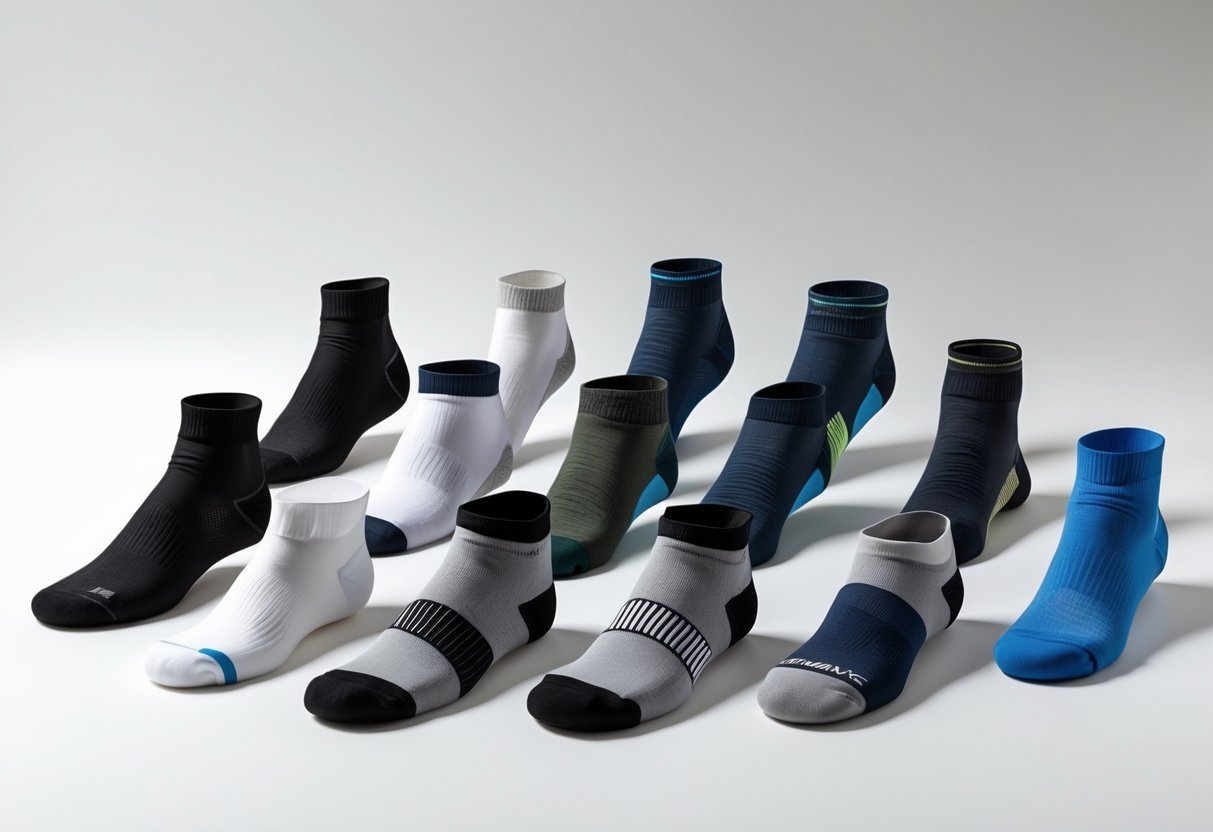
Athletic performance socks are designed specifically to support physical activity. They often include extra cushioning to reduce impact and prevent blisters during exercise. This padding helps protect key areas like the heel and ball of the foot.
Many of these socks use moisture-wicking materials to keep feet dry. Staying dry helps lower the chance of skin irritation and fungal infections. Some socks also offer added arch support to improve stability and comfort.
These socks come in different lengths, such as ankle and crew, to fit various sports and shoe types. Features like reinforced toes and heels increase durability for intense use. They are made to fit snugly, which reduces slipping inside shoes.
Athletic performance socks aim to enhance comfort and prevent injury. Their design supports balance and helps athletes perform at their best. Choosing the right pair depends on the sport, shoe style, and personal needs.
11) Toe Socks
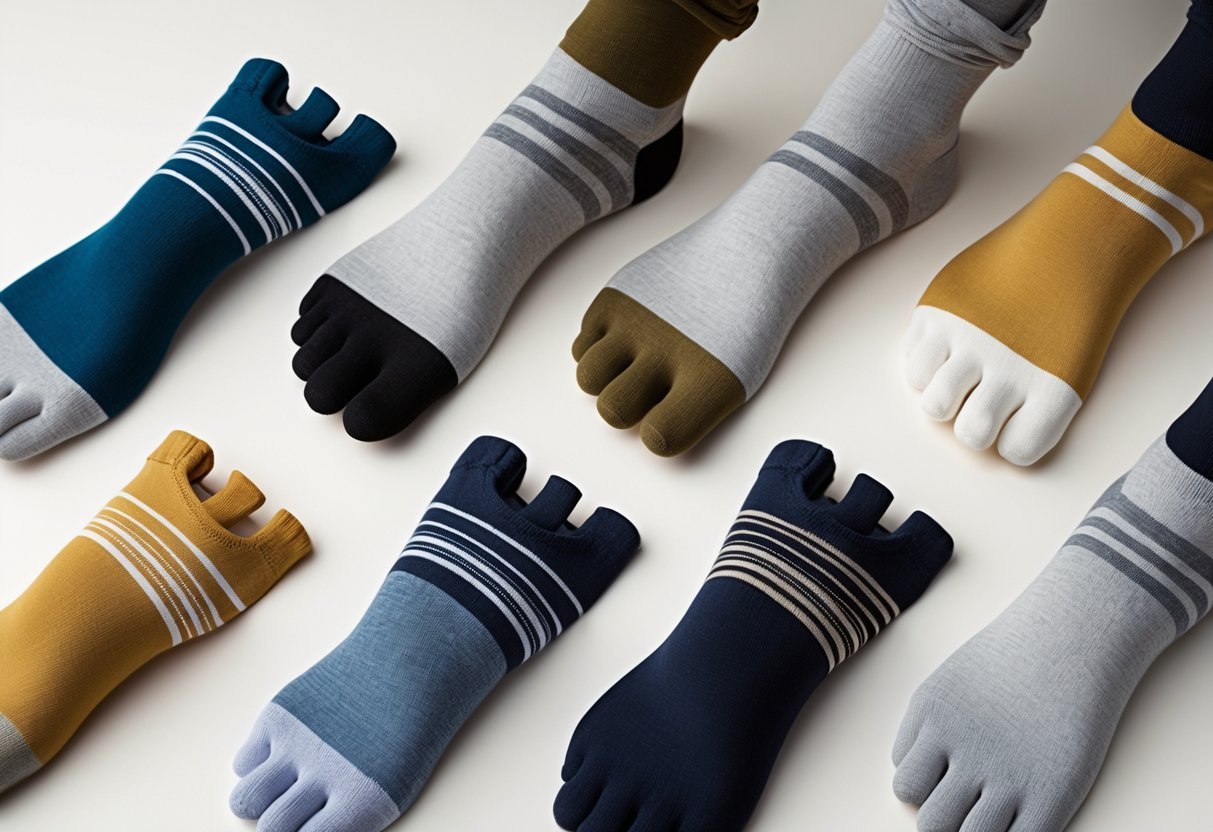
Toe socks separate each toe with its own fabric section. This design helps reduce friction between toes, which can prevent blisters and improve comfort. They can be especially useful for people who experience toe rubbing during activities like running or hiking.
These socks often come in materials like cotton, wool, or synthetic blends. They can provide warmth and breathability while allowing better toe movement. Some athletes use toe socks because they can help improve balance and toe flexibility.
Toe socks also work well with minimalist shoes or sandals. By keeping toes separated, they may help with foot alignment and reduce moisture buildup. While not everyone prefers their look or feel, toe socks offer specific benefits for foot health and comfort.
12) Liner Socks
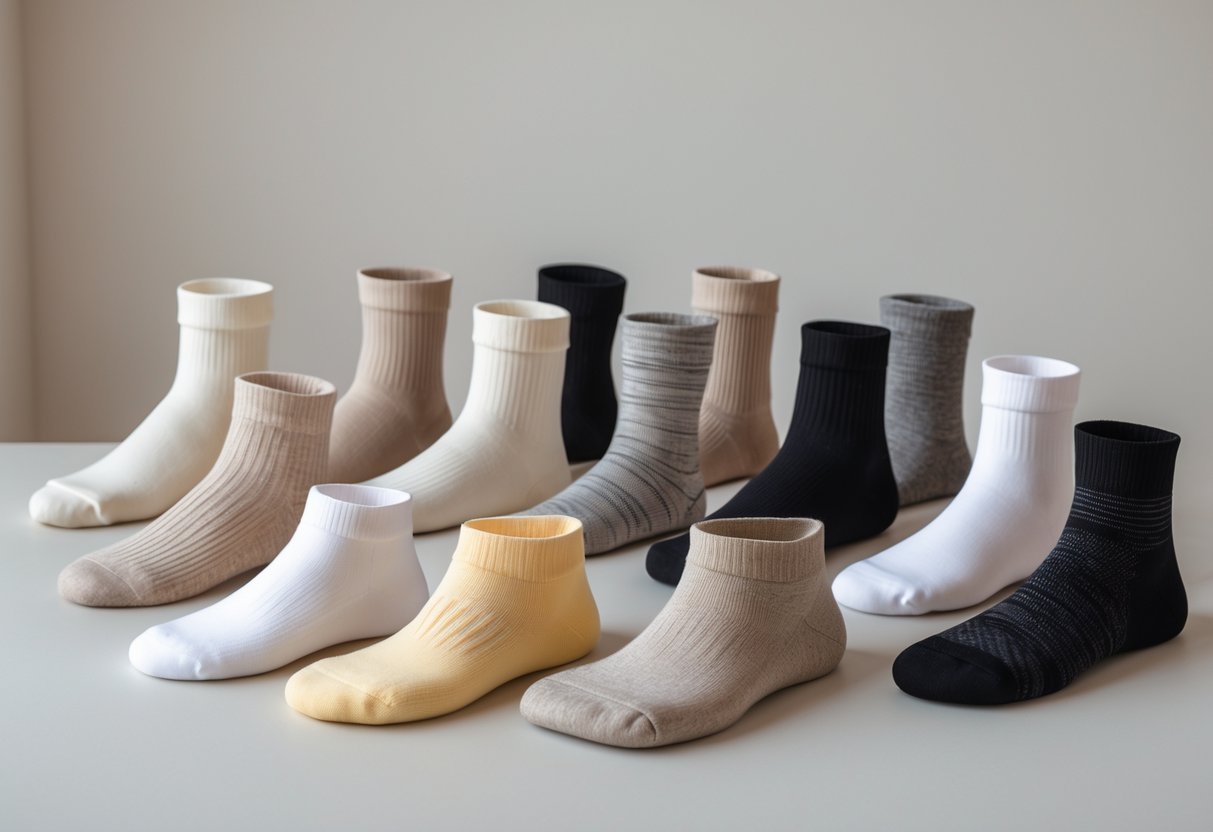
Liner socks are thin, lightweight socks designed to be worn underneath other socks. They create a smooth barrier between the foot and the heavier sock, which helps reduce friction. This can prevent blisters and discomfort during long periods of walking or running.
These socks are usually made from moisture-wicking materials like nylon or polyester. This helps keep the feet dry by moving sweat away from the skin. In addition, liner socks add a layer of warmth without adding bulk.
They are popular among hikers and athletes who need extra protection but don’t want to add a thick layer inside their shoes. Liner socks also improve the fit of larger socks. This can increase overall foot comfort and shoe performance.
Because they are so thin, liner socks can be worn with almost any type of shoe. They work well with boots, sneakers, and casual shoes. Though simple, liner socks play an important role in foot care and comfort.
13) Boot Socks
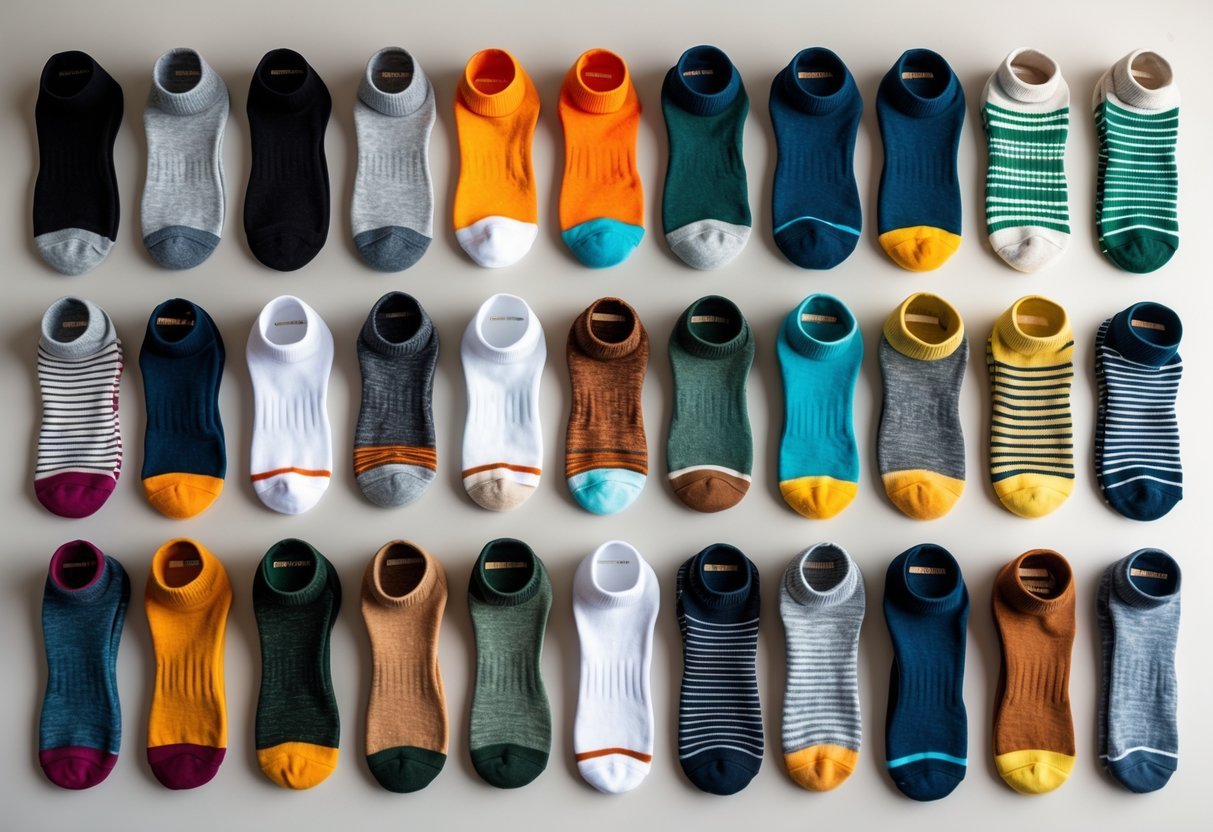
Boot socks are designed to provide extra comfort and protection when wearing boots. They usually come in thicker materials to reduce friction and prevent blisters. This makes them a good choice for hiking, work, or any activity involving heavy boots.
These socks often extend higher than regular socks, sometimes reaching mid-calf or even knee-high. This height helps protect the lower leg and keeps debris out of the boot. Many boot socks feature cushioning in key areas like the heel and sole for added support.
Materials used in boot socks vary but often include wool or synthetic blends. Wool is popular for its warmth and moisture-wicking properties, which keep feet dry. Synthetic fibers add durability and stretch for a better fit.
People wear boot socks not only for function but also for style. They come in different colors and patterns, making them suitable for work or casual wear. Proper boot socks help improve comfort and foot health during long hours on the feet.
14) Diabetic Socks
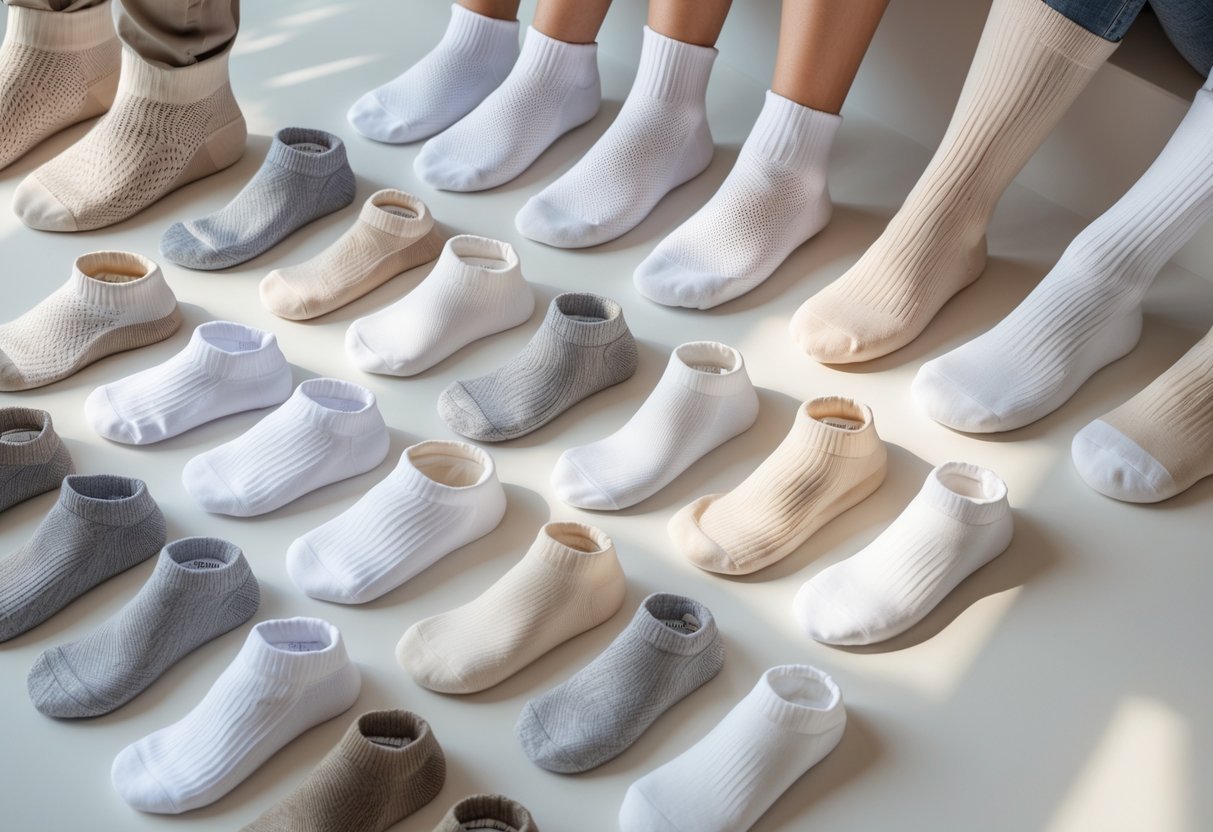
Diabetic socks are designed specifically for people with diabetes to help protect their feet. These socks usually have a seamless design to reduce irritation and prevent blisters. They also feature extra cushioning in key areas to provide comfort and reduce pressure.
These socks often use soft, breathable materials that help keep feet dry and prevent infections. They do not have tight bands or elastic tops, which helps improve circulation. Some diabetic socks offer gentle compression to support blood flow, which is important for those with circulation problems.
Different lengths are available, such as crew or ankle height, catering to personal preference and needs. Diabetic socks are made to protect sensitive skin, reduce the risk of injury, and make foot care easier for people managing diabetes.
Understanding Sock Heights
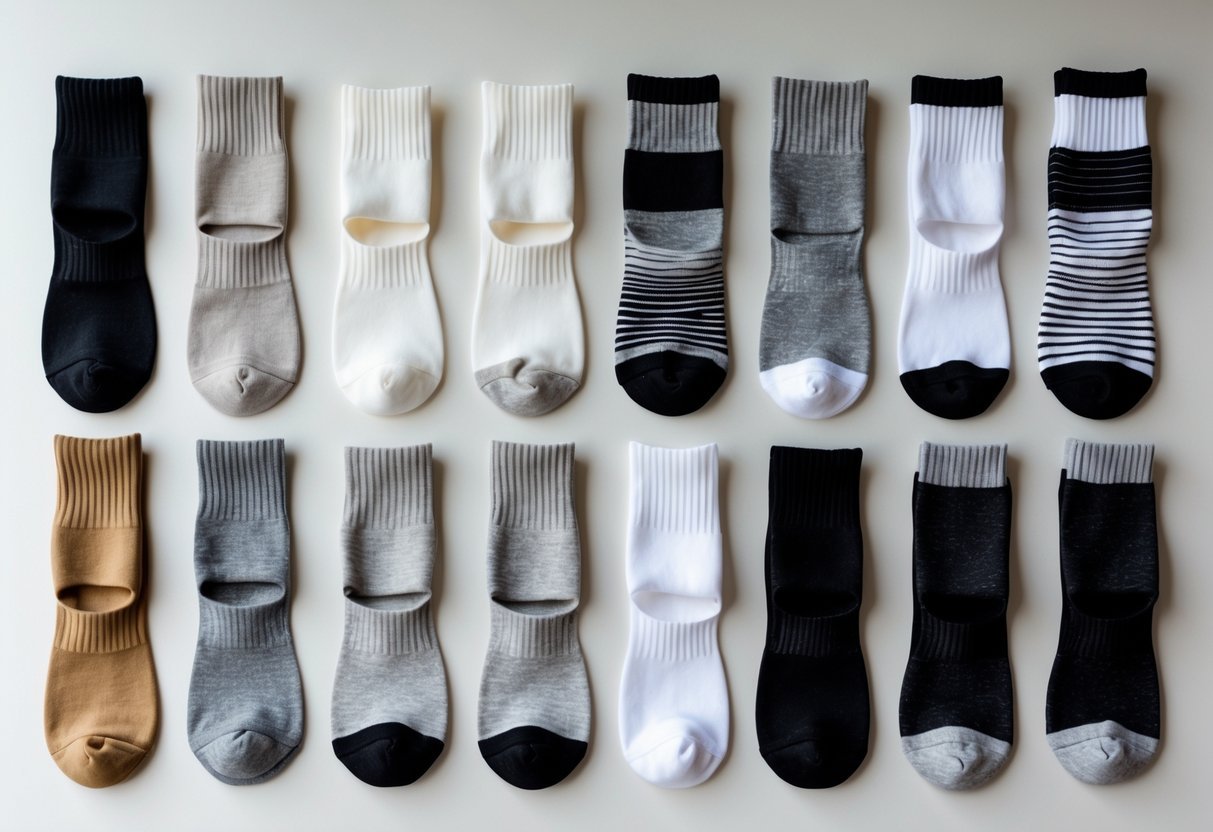
Sock height affects comfort, protection, and style. Different heights offer specific benefits depending on shoe type, weather, and activity. Selecting the right height helps prevent blisters, manage moisture, and complete a look.
How Sock Height Impacts Functionality
Sock height controls how much of the leg and ankle are covered. No-show socks hide below the ankle, ideal for low-cut shoes. They reduce sweat and friction but offer minimal protection.
Ankle socks cover the ankle bone and suit running or casual wear. They protect the ankle slightly from shoe rubbing and work well in warm weather.
Crew socks rise to the mid-calf. This height provides added warmth and padding, helpful in sports or cold conditions. They also shield the lower leg from scratches or dirt.
Longer socks like knee-highs protect muscles, improve circulation, and fit with boots. They work best in colder weather or outdoor activities.
Each height matches different functional needs in comfort, support, and protection.
Choosing the Right Sock Height for Activities
The activity largely determines the best sock height. For running or gym workouts, ankle or crew socks are common. They balance ventilation with ankle support.
For outdoor hiking, crew or knee-high socks prevent chafing and protect against debris, insects, and temperature changes.
In professional or formal settings, no-show or dress socks keep a neat appearance without showing when sitting or crossing legs.
Casual wear offers more freedom. People may choose any height based on shoe style or preference.
Choosing socks this way improves comfort while keeping feet safe and dry during specific activities.
| Activity Type | Recommended Sock Height | Key Feature |
|---|---|---|
| Running/Gym | Ankle, Crew | Ventilation and support |
| Hiking/Outdoor | Crew, Knee-high | Protection and warmth |
| Formal/Office | No-show, Dress socks | Low visibility and style |
| Casual | Any | Personal preference |
Common Sock Materials Explained
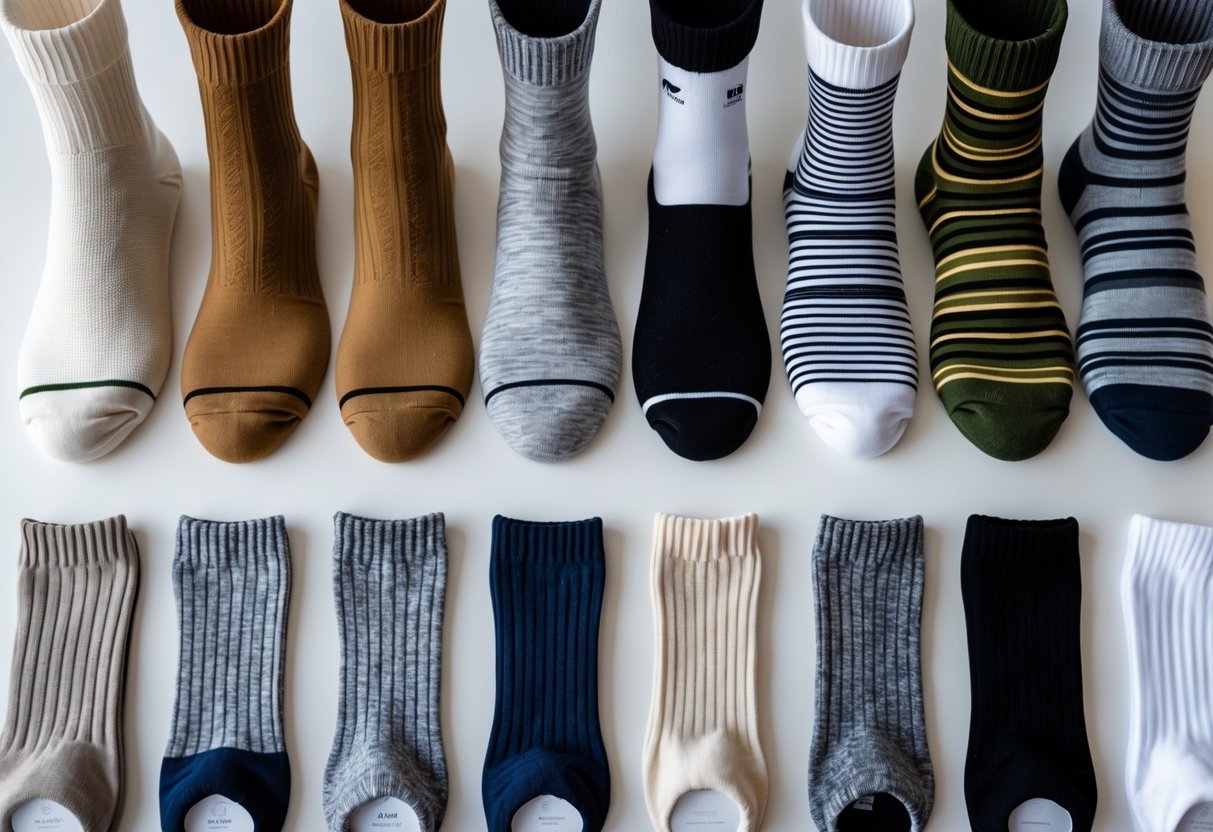
Socks come in many materials that affect comfort, durability, and use. Some fabrics come from nature while others are made in factories. Advances in material blends also improve how socks perform in different activities and environments.
Natural vs. Synthetic Fabrics
Natural fabrics include cotton, wool, and silk. Cotton is soft and breathable, making it great for everyday wear. Wool, especially Merino wool, offers warmth and moisture control, perfect for cold weather or outdoor use. Silk is smooth and often used in dress socks for a sleek feel.
Synthetic fabrics like polyester, nylon, and spandex are man-made. These materials wick moisture away from the skin and dry quickly. They also add stretch and durability to socks. Nylon strengthens the fabric, while spandex helps socks keep their shape and fit snugly.
Many socks combine natural and synthetic fibers to balance comfort and performance. This mix ensures softness with improved durability and moisture management.
Benefits of Modern Sock Materials
Modern sock materials are designed for specific needs. Moisture-wicking fabrics help keep feet dry during exercise or long days. For example, polyester blends pull sweat away to reduce blisters and odor.
Temperature regulation is another focus. Merino wool adapts to heat and cold, keeping feet comfortable in varying weather. Some synthetic blends also improve airflow and reduce sweat build-up.
Durability is key for active wearers. Reinforced toes and heels use tough fibers to extend sock life. Stretch fibers like Lycra prevent sagging after wear and washing.
In terms of comfort, modern materials provide softness without bulk. Lightweight blends prevent overheating, while cushioned socks add padding without feeling heavy. This variety allows people to find socks that fit their lifestyle and activity level.
Frequently Asked Questions
Types of Socks come in many heights and are made from different materials to meet specific needs. Each type offers unique functions for comfort, style, or performance.
What are the various sock heights available and their specific uses?
Ankle socks reach just above the ankle and are great for sneakers or low-cut shoes. Crew socks stop mid-calf, fitting well with athletic shoes and boots. Knee-high socks extend up to the knee, often used in sports or for added warmth.
No-show socks stay below the shoe line, ideal for a clean look with low shoes. Mid-crew socks fall between ankle and crew, offering moderate coverage for everyday wear.
Which materials are commonly used in sock manufacturing and why?
Cotton is popular for breathability and softness. Wool, especially merino, is used for its warmth and moisture-wicking properties. Synthetic fibers like nylon and polyester add stretch and durability. Bamboo is chosen for its antibacterial and odor-resistant qualities.
How do the different types of socks vary in functionality and style?
Athletic socks provide cushioning and support for sports activities. Dress socks focus on thin, smooth fabric for formal occasions. Compression socks improve blood flow and reduce fatigue. Novelty socks showcase patterns and fun designs, prioritizing style.
Can you list the names of socks categorized by height?
Common sock heights include:
- No-Show Socks
- Ankle Socks
- Mid-Crew Socks
- Crew Socks
- Knee-High Socks
Longer lengths such as thigh-high socks exist but are less common in everyday wear.
What are the differences between men’s and women’s sock styles?
Men’s socks often feature neutral colors and wider sizes. Women’s socks vary more in design, with brighter colors and patterns. The fit may differ to match foot shape and size variations between genders.
Which sock materials are considered the most durable and comfortable?
Wool, particularly merino, balances comfort and durability. Synthetic blends extend the sock’s life by resisting wear and maintaining shape. Cotton-rich socks feel soft but may wear out faster without synthetic reinforcement.